
Learning Disability & Psychoeducational Assessments

Learning Disability & Psychoeducational Assessments

At our practice, we provide comprehensive Psychoeducational Assessments for children, adolescents, and adults. Our goal is to move beyond simple “labels” to provide a deep understanding of an individual’s unique learning profile, identifying both their cognitive strengths and the specific psychological processes that may be hindering their academic or professional success.

Following the latest Ontario Psychological Association (OPA) Guidelines, our assessments aim for consistency and accuracy, facilitating easier transitions between elementary school, high school, and post-secondary education.


At Niagara Neuropsychology, we offer 3 levels of assessment for Learning Disabilities (LD) (Psychoeducational Assessments) for children and adolescents ages 6 and up. These tiers are designed to provide comprehensive evaluations tailored to different needs and budgets, ensuring that all families can access quality assessments.


Virtual Reality Testing

TOP TIER—ADVANCED LD/PSYCHOEDUCATIONAL ASSESSMENT:

Our most comprehensive assessment for Learning Disabilities, including evaluations for co-occurring conditions such as ADHD and Autism Spectrum Disorder (ASD).

  • Completion of a detailed background form
  • 55-minute intake interview with Dr. Friesen or one the psychologists or psychological associates he supervises (charged separately at $250)
  • Comprehensive cognitive/neuropsychological testing to assess cognitive abilities, including learning, memory, visuospatial skills, auditory processing, language, cognitive processing speed, attention, working memory, and executive functioning (~2-3 hours testing)
  • Academic Achievement Testing to identify specific learning disabilities in reading, writing, and mathematics (~2-3 hours testing)
  • Virtual Reality Attention Testing (i.e., 360 degree and 3-D).
    • Continuous Performance Testing (CPT) is the gold standard for measuring selective and sustained visual and auditory attention, motor activity (hyperactivity), reaction time, and impulsivity (~30-minutes testing)
      • For children and teens ages 6-16, Virtual Reality testing uses a classroom setting. See this video: https://youtu.be/_1veUQD968Y
      • For teens and adults ages 16+, Virtual Reality testing uses an aquarium setting. See this video: https://youtu.be/2nc0WLxC7AY
      • This can also be used to measure ADHD medication (e.g., Ritalin, Adderall, etc.) response to determine if the medication improves attention, hyperactivity, reaction time, and or impulsivity (~30-minute test)
    • Optional Virtual Reality Executive Functioning Testing (i.e., 360 degree and 3-D) for ages 8-80 uses an ice-cream store setting which measures planning, working memory, processing speed, and cognitive flexibility( ~30-minute test). See this video: https://youtu.be/CmaqI2Arwew
    • Optional Virtual Reality Memory Testing (i.e., 360 degree and 3-D) for ages 12-90 uses a furniture store setting and measures immediate and delayed verbal and visual memory and learning (~30-minute test). See this video: https://youtu.be/iBwi0Gh_yc0
  • Whole-brain quantitative electroencephalograph (qEEG) — brain mapping to assess brain function and identify potential neurological markers (~1-hour test)
  • Full psychophysiological stress testing to directly measure anxiety, coping, and stress regulation (~30-minute test)
  • Parent/teacher/self-rating measures of executive functions, ADHD, and psychosocial functioning (~15 minutes each)
  • Psychological testing to assess emotional and behavioral functioning (~30-60 minutes)
  • A detailed review of report cards and academic samples (if required).
  • 60-minute feedback session with Dr. Friesen or one the psychologists or psychological associates he supervises to discuss findings and treatment options
  • Detailed report provided for educational planning and accommodations, if required

Cost: $3500 (not including the $250 intake session fee)
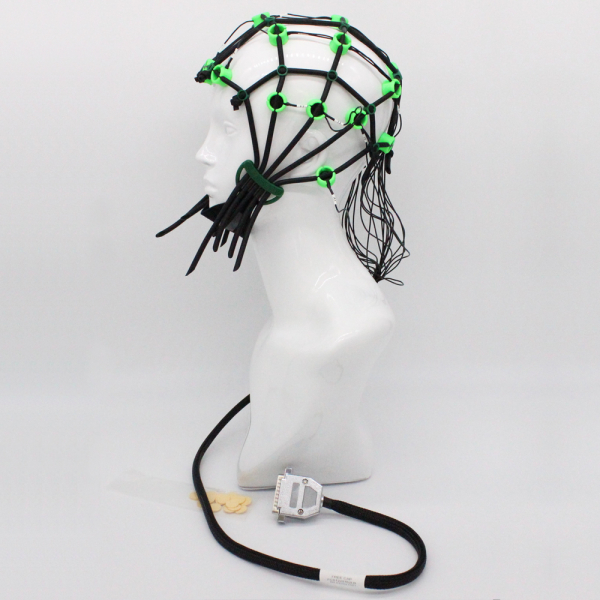

qEEG Brain Mapping

MIDDLE TIER—INTERMEDIATE LD/PSYCHOEDUCATIONAL ASSESSMENT:

A thorough Psychoeducational Assessment for Learning Disabilities with essential components for a detailed understanding of the child’s learning profile.

  • Completion of a detailed background form
  •  55-minute intake interview with Dr. Friesen (charged separately at $250)
  • Comprehensive cognitive/neuropsychological testing to assess cognitive abilities, including learning, working memory, visuospatial skills, auditory processing, language, cognitive processing speed, attention, and executive functioning (~2-3 hours testing)
  • Academic Achievement Testing to identify specific learning disabilities in reading, writing, and mathematics (~2-3 hours testing)
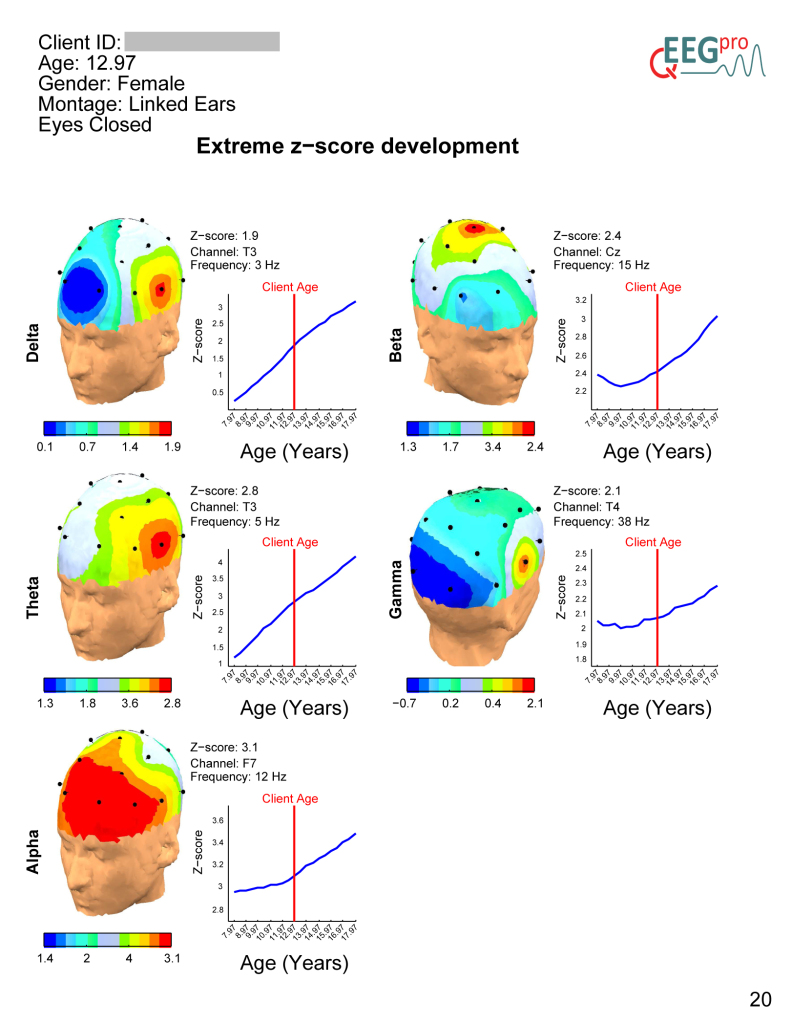
  • Whole-brain quantitative electroencephalograph (qEEG) — brain mapping to assess brain function (~1-hour test)
  • Full psychophysiological stress testing to directly measure anxiety, coping, and stress regulation (~30-minute test)
  • Parent/teacher/self-rating measures of executive functions (with ADHD screening), ASD screening, and psychosocial functioning (~15 minutes for each questionnaire)
  • Psychological testing to assess emotional and behavioral functioning (~30-60 minutes)
  • A detailed review of report cards and academic samples (if required).
  • 60-minute feedback session with Dr. Friesen to discuss findings and treatment options
  • Summary report provided for educational planning

Cost: $2800 (not including the $250 intake session fee)

LOWEST TIER—LD/PSYCHOEDUCATIONAL SCREENING:

A focused screening to identify potential learning disabilities, providing a starting point for further evaluation if needed (i.e., no diagnosis will be provided).

  • Completion of a detailed background form
  •  55-minute intake interview with Dr. Friesen (charged separately at $250)
  • Brief cognitive/neuropsychological screening to estimate intellectual abilities and briefly assess verbal abilities, visual-spatial abilities, cognitive processing speed, attention, and working memory (~1-2 hours of testing)
  • Academic Achievement Screening to identify potential learning disabilities (~1-hour testing)
  • Psychological testing to assess emotional and behavioral functioning (~30-60 minutes)
  • Parent/teacher/self-rating measures of executive functions & psychosocial functioning (~15 minutes for each)
  • A detailed review of report cards
  • 60-minute feedback session with Dr. Friesen to discuss findings and recommendations
  • Screening summary provided for initial educational planning

Cost: $1800 (not including the $250 intake session fee)


Note:

  • Insurance Coverage: Many extended health benefit plans cover psychological services. Please check with your provider (we do not directly build them. You submit your receipts)
  • Value Proposition: As a Neuropsychologist, our assessments provide a deeper understanding of your child’s learning profile, beyond standard evaluations.

This structure should help parents understand the options available and choose the assessment that best fits their needs and budget. Let me know if you need further customization or additional details!


Our Assessment Approach

Similar to our ADHD services, we offer specialized levels of assessment tailored to the individual’s history and needs. Every assessment follows a rigorous 10-step process designed to rule out external factors and pinpoint the root cause of learning struggles.

Step-Wise Diagnostic Process:

  1. Detailed History: Investigating academic impairment and excessive effort used to maintain grades.
  2. Risk Factor Screening: Reviewing developmental, health, and educational history.
  3. Standardized Achievement Testing: Measuring current skills in reading, writing, and mathematics against age-based norms.
  4. Psychological Process Assessment: Testing specific areas like phonological processing, working memory, and processing speed.
  5. Thinking & Reasoning Evaluation: Assessing global intellectual abilities in addition to strengths and weaknesses within specific cognitive areas.
  6. Social-Emotional Screening: Identifying comorbid concerns like anxiety or ADHD that often co-exist with learning disabilities.
  7. Diagnostic Formulation: Synthesizing data into a formal clinical report.
  8. Evidence-Based Recommendations: Creating recommendations for interventions and, if required, accommodations.
  9. Communication: A dedicated feedback session and a comprehensive report for parents and schools.

What is a Learning Disability (LD)?

A Learning Disability is a neurodevelopmental disorder that persistently impacts the ability to learn and use academic skills. It is diagnosed when a person demonstrates academic achievement well below their age level, despite having at least average abilities for thinking and reasoning.

A formal diagnosis requires evidence in three main areas:

  • Academic Impairment: A history of struggling in school or requiring excessive time and support to keep up.
  • Below-Average Achievement: Scores at least one standard deviation below the mean in reading, writing, or math.
  • Cognitive Process Deficit: A logical link between academic struggles and a deficit in one or more psychological processes, such as:
    • Phonological Processing (essential for reading/Dyslexia)
    • Working Memory (holding and using information)
    • Processing Speed (how quickly information is handled)
    • Executive Functioning (planning and organizing)
    • Visual-Spatial Abilities

Types of Learning Disabilities We Assess

Reading (Dyslexia)

Dyslexia is a specific subset of learning disabilities characterized by difficulties with accurate or fluent word recognition, poor decoding, and weak spelling. While many individuals learn to decode words over time, they may continue to struggle with reading fluency, which can significantly impact comprehension and academic endurance.

Writing (Dysgraphia/Written Expression)

Difficulties in writing can range from graphomotor issues (handwriting and fine motor speed) to complex problems with written expression, such as organizing ideas, grammar, and sentence structure. Spelling difficulties can also fall under this category.

Mathematics (Dyscalculia)

This includes challenges with basic numeracy and calculation, such as understanding number facts, as well as math problem-solving, which often involves the ability to process visual-spatial information or translate language into mathematical operations.

Non-Verbal Learning Disability (NLD)

While a debated diagnosis, NLD typically describes a profile of strong verbal skills contrasted by significant deficits in visual-spatial, motor, and social-communication domains. We carefully evaluate these profiles to determine if they meet the criteria for a learning disability in math or if other diagnostic considerations, such as Autism Spectrum Disorder, are more appropriate.


Why Seek a Professional Assessment?

Early and accurate identification is critical. Research shows that early intervention—particularly in grades one and two—can significantly improve long-term outcomes. Furthermore, for adults and post-secondary students, a formal psychological assessment is often required to access academic accommodations (like extra time or memory aids).


Clinical Hypnosis (Cognitive Behavioral Hypnotherapy)

Dr. Friesen primarily uses hypnosis for:

  • Anxiety
  • Stress
  • Depression
  • Low self-esteem
  • Fears/Phobias
  • Posttraumatic Stress Disorder (PTSD)
  • Negative self-talk
  • Negative emotions
  • Overcoming bad habits
  • Healing/recovering from health conditions
  • Chronic Pain
  • Insomnia/Sleep difficulties
  • Bad habits
  • Procrastination
  • Motivation
  • Peak performance
  • Sport Psychology issues (e.g., confidence, performance anxiety, motivation, injury recovery, etc.)
  • Goal achievement
  • WE DO NOT WORK WITH:
    • Weight loss
    • Diagnosed eating disorders (e.g., Anorexia, Bulimia)
    • Personality Disorders (e.g., Borderline Personality Disorder)
    • Psychosis
    • Current drug use (other than marijuana)
    • Complex Trauma/Childhood Abuse
    • Family conflict
    • Marriage issues
    • Grief

Dr. Friesen has completed Level 1 and Level 2 training through the American Society of Clinical Hypnosis (ASCH)

A 1-minute exclamation of what hypnosis is:

A sample of Dr. Friesen’s style of hypnosis:

This is a great 20-minute documentary about how indie filmmaker Peter Khella overcame his fear of heights with the aid of hypnosis by Luke Chao of the Morpheus Clinic for Hypnosis in Toronto.

Note, Dr. Friesen does not necessarily endorse Dr. Spiegel’s app as described in the videos below:


Watch Dr. Andrew Huberman interview Dr. David Spiegel on hypnosis:

The American Society of Clinical Hypnosis (ASCH) defines clinical hypnosis as a state of focused attention and reduced peripheral awareness, where individuals are more receptive to suggestions. It’s used by licensed and trained professionals to address psychological or physical problems through a highly relaxed, trance-like state.

  • Altered state of awareness:

    Hypnosis induces a state different from ordinary waking consciousness, characterized by focused attention and reduced awareness of external stimuli.

  • Enhanced capacity for response to suggestion:

    Individuals in hypnosis are more receptive to suggestions and can experience changes in perception, feelings, and behaviors based on these suggestions.

  • Used for treatment:

    Clinical hypnosis is a tool used by trained professionals (like doctors or master’s degree holders) to address a variety of medical or psychological concerns.

  • Relaxed state:

    Hypnosis is often associated with a state of deep relaxation, which is important for facilitating the therapeutic process.

Watch Dr. Mike interview Dr. David Spiegel:
In essence, clinical hypnosis involves using a specific state of mind to facilitate therapeutic change.

Hypnosis involves learning how to use your mind and thoughts in order to manage emotional distress (e.g., anxiety, stress), unpleasant physical symptoms (e.g., pain), or to help you change certain habits or behaviours (e.g., smoking, overeating).

Although hypnosis sessions may differ depending on a particular client’s needs, sessions typically have two basic phases:

• The first phase is called an induction. During this phase, your therapist may help you to relax, may ask you to imagine a peaceful scene and will help you to become more focused and concentrated on what you need to accomplish during your hypnosis session.

• The second phase is called an application phase. During this phase, your therapist will make suggestions to you. For example, if you are experiencing anxiety, your therapist may suggest that during and/or following hypnosis, you will be calmer or less bothered by feelings of anxiety. If you are experiencing pain, your therapist may suggest that following hypnosis, you will no longer experience pain, or that you will be better able to manage any pain you do experience. The suggestions are the key ingredients of hypnosis because they are targeted to treat your specific symptoms or difficulties.

Many people have concerns or worries about hypnosis based on misconceptions they have. These misconceptions may be based on things they might have seen on TV, in the movies, or in stage shows.

Listed below are some common misconceptions, and the actual facts about hypnosis:

Misconception 1: The person being hypnotized will be under the control of the hypnotist, and can be made to do or say anything the hypnotist wants.

Fact 1: This is not true. No matter how deeply hypnotized you become, you will remain in control throughout the session. You cannot be made to do anything you do not want to do, or anything that you are uncomfortable doing.

Misconception 2: Hypnosis is something that is done to people, rather than something that they can do for themselves.

Fact 2: This is not true. Hypnosis is a skill you can learn. It is a tool you can use to help yourself feel better.

Misconception 3: People become trapped in hypnosis and cannot “come out” of it when they want to.

Fact 3: This is not true. People can end hypnosis whenever they want.

Misconception 4: People have to be very “hypnotizable” or “suggestible” or “gullible” for hypnosis to work.

Fact 4: This is not true. Research has indicated that the vast majority of people can benefit from hypnosis. Furthermore, being hypnotizable or choosing to be responsive to suggestions means only that you have the ability to use hypnosis effectively. It is not at all related to being gullible or weak-willed.

Misconception 5: During hypnosis, people are unconscious.

Fact 5: This is not true. During hypnosis, people are not asleep or unconscious. Although they may feel very relaxed, they are active participants in the hypnosis session.

Is hypnosis therapy?

Hypnosis is not a type of psychotherapy. Instead, it is a technique that can be used, and that can be taught to you, in the context of other therapies.

Who should perform hypnosis?

Clinical hypnosis should be conducted only by properly trained and credentialed health care professionals (e.g., licensed psychologists) who have been specifically trained in the use of hypnosis, and who are working within the limits of their professional expertise.

What kind of results can I expect from hypnosis?

Hypnosis has been demonstrated to have a wide range of benefits, from simply improving symptoms or difficulties, to completely eliminating them.

How can I expect to feel during hypnosis?

Most people describe hypnosis as a pleasant experience, during which they feel focused and absorbed in the hypnotic experience. Depending on how you and your therapist agree to structure your hypnosis sessions, they may help you to feel more alert, more relaxed, more comfortable, or more peaceful.

How many sessions does hypnosis require?

The number of clinical hypnosis sessions needed varies greatly depending on the individual and the specific issue being addressed. A general guideline is that most people see results within 4-6 sessions. However, some may require more or fewer sessions, and some may even see improvement after just one session.  Some may require 15 sessions. Hypnosis works faster when patients/clients do the recommended home and self-help work between sessions.

If you listen to Dr. Friesen’s Hypnosis audios,

Make sure you won’t be disturbed for the duration of the hypnosis.

Best to sit down in a comfortable chair, lean back on a couch or recliner, or lie down.

What hypnosis is:

o It’s something you do, not something that is done to you. It’s a skill (a verb), not a passive state (noun).

o It’s  focused state of attention or absorption (like you may get reading a good book or watching a good movie) that helps you respond to suggestions that you find valuable.

o It’s like guided-daydreaming– you’re still aware but absorbed.

o In a more relaxed and receptive state your mind is more likely to integrate suggestions you want.

o Goal is to engage in your imagination to strengthen the power of your own mind. Your brain won’t accept suggestions you don’t want or like (e.g., to quack like a duck). You’re always in control.

Your mind is in charge, and you decide how much to embrace the suggestions.

Research shows it’s more than placebo and relaxation. Lots of evidence for many areas:

o Pain

o Anxiety

o Stress

o Depression

o Smoking cessation

o IBS

o Sleep

o Bad habits

o Confidence

o Self-esteem

o Focus o Motivation

o Sport & Work Performance

You are not expected to & not necessary to be in a “deep trance”.

It helps to be at least mildly relaxed and focused on what I say.

Just allow yourself to relax.

It works best when you focus on what I’m saying and imagine it happening.

Just allow yourself to become absorbed in your own experience and allow your mind to respond to the suggestions.

You may not be aware of everything I say during the session and that’s OK.

You may get close to sleep which is fine too.


Welcome to Niagara Neuropsychology

**NEWS**–Dr. Frisnr_member_seal_2017iesen is now board certified in Neurofeedback through the Biofeedback International Certification Alliance (BCIA) and we are offering both Biofeedback and Neurofeedback training and treatments. Neurofeedback (also known as Neurotherapy or EEG Biofeedback), is a type of biofeedback that uses real-time displays of brain activity, to teach self-regulation of brain function. Typically, sensors are placed on the scalp to measure LoL activity, with measurements displayed using video displays or sound.

Biofeedback is a process that enables an individual to learn how to change physiological activity for the purposes of improving health and performance. Precise instruments measure physiological activity such as brainwaves (neurofeedback), heart function (e.g., HRV), breathing, muscle activity, and skin temperature. These instruments rapidly and accurately “feed back” information to the user. The presentation of this information — often in conjunction with changes in thinking, emotions, and behaviour — supports desired physiological changes. Over time, these changes can endure without continued use of an gaming instrument (adapted from The International Society for Neurofeedback and Research www.isnr.org).

Neurofeedback and Biofeedback are used to treat ADHD, anxiety, depression, stress, epilepsy, headache, TBI, strokes, and to help with optimal performance for those who want to perform at their best such as students, entrepreneurs, executives, and athletes.

friesen-logo**NEWS**–Dr. Friesen has launched Friesen Sport & Performance Psychology (www.FriesenPerformance.com) which offers in-person sport and performance psychology services to serious athletes (children, adolescents, adults, and seniors) from Ontario’s Golden Horseshoe region (Niagara to Oakville). We also focus on helping high achievers (e.g., athletes, executives, entrepreneurs, academics, writers) achieve goals and improve their performance and productivity. We do this by leveraging the latest research from sport/performance psychology, executive coaching, and cognitive neuroscience. We offer coaching, consulting, and workshops to high-achieving individuals and businesses looking to maximize personal and professional potential. Dr. Friesen also provides such services online (e.g., Skype) or via phone to high achievers across North America.

**NEWS**2013–Dr. Friesen and the NNS now offer one-on-one personal and executive coaching/consulting to individuals looking to increase their personal and/or professional potential/success. We are also now providing personalized career guidance to students and those considering a career change. The process involves helping individuals find career paths that are most suitable to their unique interests, personality, passions, and strengths. This can be done in-person, via phone, and/or online (e.g., Skype). 

**NEWS** October 16, 2011–We now offer evidence-based psychological (e.g., Cognitive Behavior Therapy–CBT and Acceptance & Commitment Therapy–ACT) and neuropsychological assessments and treatments to individuals who have been injured in motor vehicle accidents and eligible members of the Canadian Armed Forces, veterans, and the RCMP. We also offer services to those who have developed psychological or neuropsychological difficulties as a result of a workplace accident or incident (i.e., through the WSIB). Such services are directly billed to your insurance company once approved. Please contact us for further details.

Niagara Neuropsychology provides neuropsychological and psychological services to the Niagara, Hamilton, Halton, Haldimand-Norfolk, and Brant regions.

Niagara Neuropsychology was founded by Dr. Christopher Friesen, Ph.D., C.Psych. and officially opened in January 2011. The mission of the Niagara Neuropsychology is to provide evidence-based psychological and neuropsychological services to the Niagara and surrounding region. Particular areas of focus include neuropsychological and psychological assessment and the use of cutting-edge treatments to help those with mental health and neurological difficulties.

Biographical Information about Dr. Christopher Friesen, Ph.D., C.Psych., BCIA-BCN, Director of the Niagara Neuropsychology

Dr. Friesen is authorized to practice in the areas of clinical psychology, clinical neuropsychology, and forensic/correctional psychology and works with children, adolescents, adults, and seniors and is a member in good standing with the College of Psychologists of Ontario. He obtained his M.A. and Ph.D. degrees in the area of Adult Clinical Psychology from York University. He completed a CPA/APA accredited internship at the Centre for Addiction and Mental Health (CAMH) with major rotations in the Adult Forensic Outpatient Service and the Psychological Trauma/Work, Stress, and Health Program, where he also worked for several years. He obtained his neuropsychology training at the Toronto Rehabilitation Institute’s (TRI) Neurology Services and the Baycrest Centre for Geriatric Care. He obtained his forensic/correctional training at CAMH and at the Ontario Correctional Institute (OCI).  He is board certified in neurofeedback (EEG biofeedback) by the Biofeedback Certification International Alliance (BCIA-BCN). He has held contract faculty positions for York University’s and the University of Guelph’s departments of psychology where he taught courses in psychological assessment and measurement. He has been an invited reviewer for the American Psychological Association’s journal Psychological Assessment. In 2017 he was the invited guest editor for the Canadian Psychological Association’s national magazine for a special issue focusing on concussions. He is currently the director of Niagara Neuropsychology and Friesen Sport & Performance Psychology and works as a consultant psychologist/neuropsychologist for various agencies throughout southern Ontario, including the Niagara Regional Police Service. He is a member of the following organizations: American Academy of Clinical Neuropsychology; National Academy of Neuropsychology; Association for Contextual Behavioral Science; APA Division 13—Society of Consulting Psychology; Association for Applied Sport Psychology; International Society for Coaching Psychology; APA Division 47—Society for Sport, Exercise & Performance Psychology; Sports Neuropsychology Society; International Society for Neurofeedback Research; Association for Scientific Advancement in ?Psychological ?Injury and Law. 

SaveSave

SaveSave

SaveSave